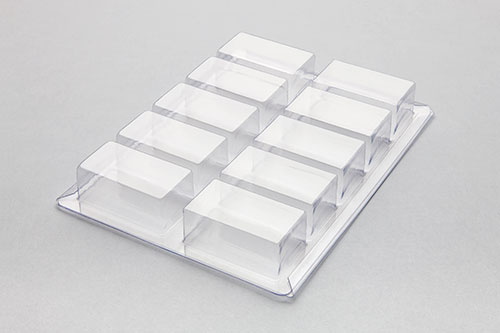
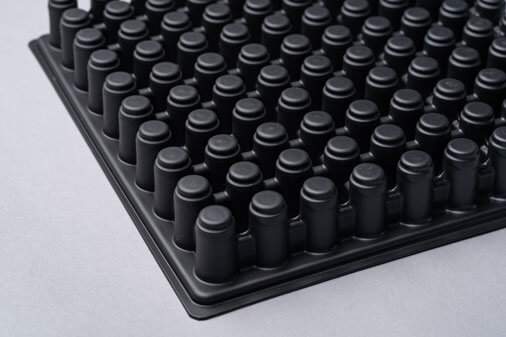
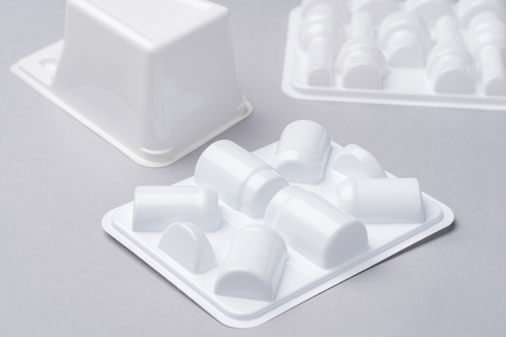
Every thermoformed package begins with the right material. The plastic you choose affects product protection, appearance, manufacturing efficiency, sustainability, and overall cost. At Munot Plastics, we work with a wide range of thermoforming materials to help manufacturers develop packaging that performs throughout its entire lifecycle, from production and shipping to retail display and end use.
Whether you're designing retail packaging, food containers, medical packaging, or industrial trays, our engineering team helps identify the material best suited for your product and application.
Scroll left or right to see more information.
Recycling Code
Polymer Abr.
Polymer Name
Recyclable
PCR
Post-Consumer Recycled
Yes
HIPS
High Impact Polystyrene
Yes
PVC
Polyvinyl Chloride
Yes
PET
Polyethylene Terephthalate
Yes
PETG
Polyethylene Terephthalate Glycol
Yes
HDPE
High Density Polyethylene
Yes
PP
Polypropylene
Yes
CPET
Crystalline Polyethylene Terephthalate
Yes
OPS
Oriented Polystyrene
Yes
ABS
Acrylonitrile Butadiene Styrene
Yes
Other
Miscellaneous
Yes
Munot’s vendors use a max of 80% recycled material in their Utility run HIPS, PVC, PET
How to Choose the Right Material
Selecting a thermoforming material involves more than simply choosing between clear or opaque plastics. Every application has its own performance requirements, and the ideal material depends on how the package will be manufactured, handled, and used.
When evaluating materials, our team considers factors such as:
Product weight and geometry
Required strength and rigidity
Desired clarity or visual appearance
Temperature exposure
Chemical resistance
Food or medical application requirements
Sustainability objectives
Manufacturing and transportation conditions
This application-first approach helps ensure the finished package performs as intended while avoiding unnecessary material costs.
Explore Individual Material Guides
Each thermoforming material offers a unique combination of properties. Visit our individual material pages to learn more about the advantages, applications, and performance characteristics of each option.
Each guide provides more detailed information to help purchasing managers, engineers, and product designers evaluate the best material for their packaging application.
Material Selection Is Part of the Engineering Process
Choosing the right resin is only one step in creating successful thermoformed packaging. Material performance is closely tied to package geometry, sheet thickness, tooling design, and manufacturing methods.
Different materials can often meet the same design objective, but with varying tradeoffs in appearance, durability, manufacturability, and cost. Our team works closely with customers to evaluate those tradeoffs early in the design process, helping identify practical solutions that align with both product requirements and production budgets.
By considering the complete packaging system, not just the plastic, we help manufacturers improve efficiency, reduce waste, and develop packaging that delivers long-term value.
Find the Right Material for Your Packaging
Whether you're developing a new package or refining an existing design, selecting the right thermoforming material is an important decision. The Munot Plastics team is available to discuss your application, explain the differences between available materials, and help you identify the best option for your packaging goals.