Choosing the right plastic packaging involves more than selecting the right material, it also means deciding whether your package should be clear or opaque. While clear packaging is often associated with retail display and product visibility, opaque packaging can provide greater durability, conceal sensitive components, and reinforce a brand's visual identity.
Neither option is inherently better. The right choice depends on your product, how it will be used, where it will be displayed, and what your packaging needs to accomplish. Understanding the advantages of each approach can help manufacturers design packaging that protects products, supports operational requirements, and creates the right impression for customers.
Why Packaging Appearance Matters
Packaging serves several purposes beyond protecting the product inside. It also communicates quality, supports branding, improves handling, and influences purchasing decisions.
For consumer-facing products, the package is often the first physical interaction a customer has with a brand. In industrial environments, packaging may instead be designed to organize components, simplify assembly, or protect parts throughout transportation.
Because packaging serves different functions across different industries, deciding between clear and opaque materials should begin with the application's objectives rather than aesthetics alone.
When Clear Plastic Packaging Makes Sense
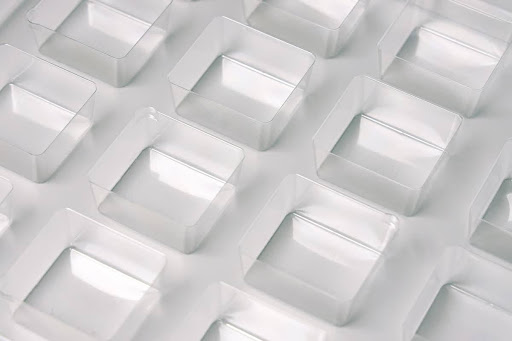
Clear packaging allows customers, inspectors, and production teams to immediately view the contents without opening the package. This can improve product presentation, simplify quality inspections, and increase buyer confidence.
Clear thermoformed packaging is commonly used for:
- Retail blister packaging
- Plastic clamshells
- Consumer electronics
- Health and beauty products
- Bakery and deli packaging
- Medical device packaging requiring product visibility
From a merchandising standpoint, transparency helps products become part of the package design. Customers can evaluate color, size, and overall quality before making a purchasing decision, reducing uncertainty while enhancing shelf appeal.
Materials commonly used for clear thermoformed packaging include PET, PETG, PVC, and OPS, each offering different combinations of clarity, durability, and performance depending on the application.
When Opaque Packaging Is the Better Choice
Not every product benefits from being displayed. Many manufacturers prioritize protection, organization, or functionality over visibility, making opaque materials a more practical solution.
Opaque packaging is frequently selected for:
- Industrial handling trays
- Work-in-process trays
- Automotive components
- Manufacturing fixtures
- Tool organization
- Protective shipping packaging
- Products sensitive to light exposure
Opaque plastics are also available in a wide range of standard and custom colors, allowing manufacturers to match corporate branding, distinguish product lines, or color-code components for manufacturing and inventory management.
Materials such as High Impact Polystyrene (HIPS) and High Density Polyethylene (HDPE) are commonly chosen for these applications because they offer excellent structural performance while maintaining an economical cost.
Beyond Visibility: Other Factors to Consider
While appearance is important, several additional considerations influence whether clear or opaque packaging is the better solution.
Product Protection
Fragile or precision components often require packaging that minimizes movement during transportation. In these cases, package geometry and material strength are typically more important than transparency.
Branding and Shelf Appeal
Clear packaging showcases the product itself, while opaque packaging relies more heavily on graphics, color, and overall package design to communicate brand identity.
Manufacturing Environment
Industrial applications frequently benefit from opaque trays because they can be color coded for production lines, assembly processes, or inventory systems.
Regulatory Requirements
Food and medical packaging may require FDA-compliant materials regardless of whether the package is clear or opaque. Material selection should always be evaluated alongside applicable regulatory requirements.
Material Performance
Different plastics offer varying levels of impact resistance, chemical resistance, temperature performance, and rigidity. Appearance should be considered alongside these functional characteristics rather than as a standalone decision.
Choosing the Right Material
The choice between clear and opaque packaging also helps narrow your material options.
For applications where product visibility is important, materials like PET, PETG, PVC, and OPS offer excellent clarity and are commonly used for retail, food, and medical packaging. When durability and structural performance take priority, HIPS and HDPE are popular choices for industrial trays, protective packaging, and reusable applications.
Food packaging often requires additional consideration, with materials such as PP, CPET, PET, and HDPE available in FDA-compliant grades for qualifying applications.
Ultimately, the right material depends on your product's performance requirements, manufacturing process, and end-use environment, not simply whether the package is clear or opaque.
Why Material Selection Is Only One Piece of the Process
A successful thermoformed package is the result of thoughtful engineering, not just selecting the right resin.
Package geometry, wall thickness, tooling design, nesting requirements, and manufacturing efficiency all influence the finished product's performance. Two packages made from the same material can perform very differently depending on how they are engineered.
Working with an experienced thermoforming manufacturer early in the design process allows these variables to be evaluated together. This often results in better product protection, improved manufacturing efficiency, and lower long-term production costs.
Whether your project requires packaging design, thermoform tooling design, or full packaging production, integrating design and manufacturing under one roof helps ensure every decision supports the final packaging solution.
Develop Packaging That Fits Your Product
Clear and opaque packaging each offer distinct advantages, and the right choice depends on your product, your customers, and your production requirements. At Munot Plastics, we help manufacturers evaluate material options, optimize package designs, and develop custom thermoformed packaging that balances appearance, protection, manufacturability, and cost.
If you're planning a new packaging project or considering alternative materials, our team is ready to help you identify the solution that best fits your application.