Walk down any retail aisle or open a medical device box, and there's a good chance you're looking at PETG. It's one of the most widely used materials in custom thermoformed packaging, prized for its clarity, strength, and ability to form into precise, complex shapes without cracking or clouding. So what exactly is PETG, and why do packaging engineers reach for it so often?
Understanding what this material is, and where it actually performs best, makes it a lot easier to figure out whether it's the right fit for your next packaging project.
Understanding PETG and Its Unique Properties
PETG stands for Polyethylene Terephthalate Glycol modified. It's a variation of standard PET (polyethylene terephthalate), made by adding glycol during production. That small change makes a big difference: PETG thermoforms more easily than standard PET, resists cracking under stress, and stays optically clear even when it's formed into deep or detailed cavities.
Unlike some rigid plastics that get brittle once they're shaped, PETG holds onto its flexibility and impact resistance after forming. That mix of clarity, durability, and formability is a big part of why it's become a go to resin in custom thermoforming.
Why PETG Is a Popular Thermoforming Material
PETG runs well on thermoforming equipment, and that matters just as much to packaging engineers as how the finished part performs. A few reasons it's become such a workhorse material:
- Low forming temperatures, which help cut energy costs and speed up cycle times
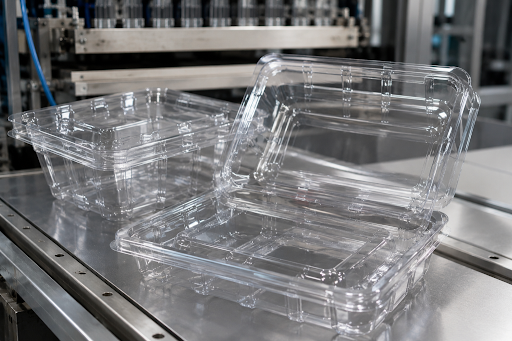
- Excellent clarity that holds up through deep draw forming, supporting retail visibility and easy product inspection
- Strong impact resistance, protecting contents during shipping and handling
- Recyclability, which lines up with the sustainability goals a lot of brands are prioritizing right now
- Compatibility with common sterilization methods used in medical packaging
Because it forms so cleanly around tight tolerances and fine detail, PETG is also a solid choice whenever a package needs to hold a component securely in place, not just contain it.
Where PETG Is Commonly Used
PETG shows up across a wide range of industries, largely because its clarity and strength serve both function and presentation at the same time. A few of the most common applications include:
- Medical packaging, where PETG trays and blisters maintain a sterile barrier while still allowing visual inspection of the device inside, a key reason it's used across medical packaging programs
- Retail packaging, where its clarity makes it a natural fit for blister packs and clamshells sold in retail environments where shelf appeal matters
- Electronics packaging, in trays designed to protect sensitive components while keeping them easy to inspect during quality checks, common in electronics manufacturing
- Cosmetics packaging, where clarity and a polished finish support how a brand presents itself on shelf, which is why it's a popular pick in cosmetics packaging
How PETG Compares to Other Packaging Materials
Choosing a resin usually comes down to comparing PETG against a short list of alternatives, most often PVC and HIPS. Compared to PVC, PETG offers similar clarity and formability, but without some of the environmental and disposal concerns that come with PVC. We go into more detail on this in our PET vs. PVC comparison. Compared to HIPS, PETG offers noticeably better transparency, which makes it the stronger choice whenever a product needs to be visible through the packaging rather than hidden behind an opaque tray.
Neither alternative is a bad choice. It really comes down to how much you're willing to trade off on clarity, cost, or forming behavior, and what the packaging actually needs to do beyond just holding the product.
Key Advantages and Considerations of PETG
PETG isn't the right material for every application, but where it fits, it tends to fit well.
Advantages:
- High clarity for products that need to be visible through the package
- Strong impact resistance during shipping and handling
- Food and medical grade options available
- Good recyclability, supporting sustainability goals
- Reliable performance across a wide temperature range
Considerations:
- Typically costs more than commodity resins like HIPS
- Not ideal for applications involving extreme heat or chemical exposure beyond its rated tolerances
For most standard retail, medical, and electronics packaging applications, those tradeoffs work out in PETG's favor.
Choosing the Right Material for Your Packaging Application
Material selection should really start with the product, not the resin. It helps to ask a few questions early on. Does the package need to be optically clear, or is an opaque material fine? Will it be exposed to sterilization, extreme temperatures, or chemical contact? Does it need to be recyclable to support a sustainability commitment? And how much impact resistance does the product genuinely need during shipping and handling?
Our materials page covers PETG alongside other thermoforming resins, so you can weigh your options before locking in a design direction.
Partner with Munot Plastics for Custom PETG Packaging
For decades, Munot Plastics has helped manufacturers across medical, electronics, retail, and cosmetics industries design and produce custom thermoformed packaging that performs as well as it looks. Our team works directly with your engineers from material selection all the way through packaging design and full scale production, so you're never left guessing whether PETG, or any material, is the right call for your product.
Ready to explore PETG for your next packaging project? Contact Munot Plastics today to talk through your requirements and get a custom project estimate.