
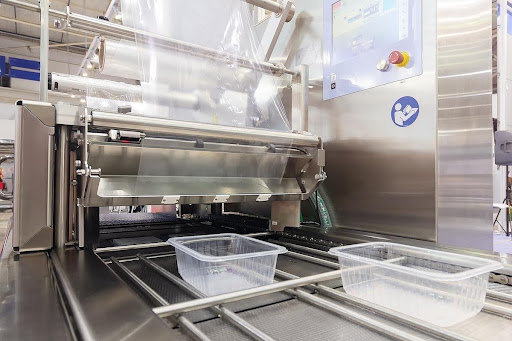
Draft angles are one of the most important, and often overlooked, design elements in thermoformed packaging. A properly designed draft angle allows a formed plastic part to release cleanly from the mold, improves manufacturing efficiency, reduces part defects, and helps extend tooling life. Without adequate draft, packaging can become difficult to produce, increasing cycle times, tooling wear, and the likelihood of damaged parts.
Whether you're designing a blister package, clamshell, tray, or custom protective insert, understanding how draft angles influence thermoforming can help improve both packaging performance and long-term production costs.
What Is a Draft Angle?
A draft angle is the slight taper applied to the vertical walls of a thermoformed part. Instead of being perfectly perpendicular, the walls are intentionally angled so the finished part can be removed from the mold after forming.
Although the angle may only be a few degrees, it plays a critical role in the manufacturing process. As heated plastic cools, it naturally shrinks around the mold. Without sufficient draft, the part can grip the tooling, making removal more difficult and increasing the risk of distortion or damage.
Draft angles are considered during the earliest stages of package design because they directly influence manufacturability, tooling complexity, and overall package performance.
Why Are Draft Angles Important?
Proper draft angles benefit both the manufacturer and the finished package.
Some of the most significant advantages include:
- Easier part release from the mold
- Reduced stress on thermoform tooling
- Lower risk of part distortion during removal
- Improved dimensional consistency
- Faster production cycles
- Reduced scrap and rejected parts
- Longer tooling life
- More predictable manufacturing performance
While draft angles may seem like a minor design detail, they can have a measurable impact on production efficiency over the life of a packaging program.
What Happens When There Isn't Enough Draft?
Insufficient draft can create manufacturing challenges that affect quality, productivity, and cost.
Common issues include:
Parts Sticking to the Mold
Without enough taper, the formed plastic can cling tightly to the tooling, making removal more difficult and increasing the likelihood of damaged parts.
Increased Tool Wear
When parts require additional force to remove, both the tooling and the formed package experience greater stress. Over time, this can contribute to unnecessary tooling wear and maintenance.
Longer Cycle Times
Difficulty releasing parts often slows production. Even small increases in cycle time can have a significant impact during high-volume manufacturing runs.
Cosmetic Defects
Improper draft can contribute to surface scuffing, distortion, or deformation as parts are removed from the mold, particularly for packages requiring premium cosmetic finishes.
Draft Angles Are Only One Part of Good Package Design
While draft angles are important, they work alongside several other design considerations to create a successful thermoformed package.
Engineers also evaluate factors such as:
- Wall thickness
- Part geometry
- Corner radii
- Material selection
- Deep-draw requirements
- Tool construction
- Product orientation within the package
These elements influence how plastic flows during forming and how consistently the finished package can be manufactured.
Optimizing each of these variables early in the design process often reduces production issues while improving package quality and material efficiency.
How Material Selection Influences Draft Requirements
Different thermoforming materials behave differently during the forming and cooling process.
For example, materials with excellent deep-draw characteristics, such as PETG, may perform well in more complex package geometries, while durable materials like HDPE and HIPS are often selected for industrial applications where structural performance is critical.
Material shrinkage, flexibility, surface finish requirements, and part geometry all influence the amount of draft needed for a particular design. Because of these variables, draft angles should never be considered independently of the material selection process.
Why Engineering Matters in Thermoformed Packaging
One of the biggest misconceptions about thermoforming is that packaging performance depends primarily on the plastic material. In reality, successful packaging is the result of thoughtful engineering long before production begins.
Design decisions such as draft angles, wall thickness, tooling geometry, and material selection all work together to determine how efficiently a package can be manufactured and how well it performs in real-world use.
Working with an experienced thermoforming manufacturer early in the development process helps identify potential manufacturing challenges before tooling is built. This collaborative approach can reduce redesigns, improve production efficiency, and create packaging that is easier and more economical to manufacture over the long term.
Engineer Better Packaging with Munot Plastics
At Munot Plastics, every packaging project begins with manufacturability in mind. Our engineering team evaluates product geometry, material selection, tooling design, and production requirements together to develop packaging that performs reliably from prototype through full-scale manufacturing.
With integrated packaging design, thermoform tooling design, or full packaging production capabilities, we help manufacturers optimize every aspect of their thermoformed packaging, not just the material or the mold.
If you're developing a new packaging project or evaluating an existing design, contact the Munot Plastics team to learn how thoughtful engineering decisions like proper draft angles can improve manufacturability, reduce production costs, and deliver more consistent packaging performance.