As corporate sustainability initiatives expand and consumer demand for eco-friendly packaging grows, businesses face a critical material selection choice, and understanding the key differences between recycled and virgin plastics is essential for balancing sustainability goals with structural performance, visual clarity, and cost-efficiency.
In custom thermoforming, there is no single "best" material for every application. Virgin polymers offer uncompromised purity and pristine optical clarity, while recycled polymers deliver measurable carbon-footprint reductions and support circular economy goals. Because both material classes possess distinct advantages, evaluating your product’s structural demands, regulatory environment, and aesthetic expectations ensures you select a polymer that delivers optimal performance without unnecessary expense.
Defining Virgin Plastics and Recycled Plastics (PCR vs. PIR)
To make an informed selection, it helps to first understand how these polymer categories are produced and sourced.
Virgin Plastics
Virgin plastics are newly synthesized polymers derived directly from petrochemical feedstocks or bio-based raw materials that have never undergone prior processing or consumer use. Resins such as virgin Polyethylene Terephthalate (PET), High-Density Polyethylene (HDPE), Polypropylene (PP), and High Impact Polystyrene (HIPS) represent the baseline for chemical purity. Because their molecular chain length and chemical composition are completely uniform, virgin materials deliver predictable performance under heat, pressure, and stress.
Recycled Plastics
Recycled plastics are created by re-processing existing plastic materials into reusable thermoforming sheet stock. Within the recycled category, materials are divided into two distinct streams:
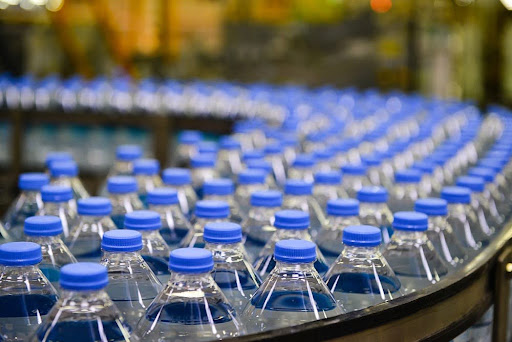
- Post-Consumer Recycled (PCR): PCR plastic is manufactured from materials collected through municipal recycling programs such as consumer water bottles, food containers, and jugs. After collection, the plastic is sorted, thoroughly washed, melt-filtered, and re-pelletized. PCR gives used plastic a second life, directly reducing landfill waste and lowering greenhouse gas emissions associated with raw resin production.
- Post-Industrial Recycled (PIR): Also known as pre-consumer recycled material or "utility run" plastic, PIR consists of clean scrap generated during manufacturing processes such as edge trim from thermoforming lines or skeleton scrap from stamping operations. Because PIR stays within industrial quality-control loops, it remains exceptionally clean and offers high consistency.
Key Performance Factors Compared
Evaluating recycled versus virgin plastics requires looking at four primary performance metrics:
1. Tensile Strength and Mechanical Integrity
Virgin plastics exhibit maximum polymer chain length, which translates into optimal tensile strength, impact resistance, and flexural fatigue endurance. When plastics undergo repeated heat cycles during recycling, slight thermal degradation can shorten these polymer chains. However, modern extrusion technology and advanced resin blending, such as combining recycled content with virgin capping layers, allow high-percentage recycled sheets to achieve mechanical properties nearly identical to virgin resins for most structural applications.
2. Optical Clarity
For retail packaging where product visibility is paramount, optical clarity is a key consideration. Virgin APET and PETG offer glass-like transparency with zero haze or tinting. Recycled PET (RPET), particularly PCR, may carry a subtle bluish, greyish, or yellowish tint due to minute variations in source materials. While PIR maintains strong clarity, virgin resins remain the premier choice for ultra-clear retail display clamshells.
3. Material Purity and Consistency
Virgin polymers provide complete chemical batch-to-batch consistency and are virtually free from microscopic particulate inclusions. Recycled polymers undergo rigorous melt filtration to remove contaminants, but slight lot-to-lot variations in melt flow index (MFI) can occur. High-grade PIR offers purity levels very close to virgin resin, making it an excellent bridge between sustainability and performance.
4. Cost Efficiency
Historically, recycled plastics offered significant cost savings over virgin resins. Today, market fluctuations and high demand for food-grade PCR can sometimes create price parity between high-purity recycled resins and virgin stocks. However, utility-run PIR blends (offering up to 80% recycled content in materials like HIPS, PVC, and PET) remain highly cost-effective options for industrial trays and internal transport packaging.
Industry Applications and Regulatory Considerations
Regulatory mandates and end-use environments play a major role in determining whether virgin or recycled plastic is appropriate.
- Medical Devices & Sterile Packaging: Medical component packaging, surgical trays, and pharmaceutical blisters demand strict compliance with FDA regulations and ISO standards. Because medical packaging must undergo rigorous validation and withstand sterilization processes (such as gamma radiation or EtO) without off-gassing or structural change, virgin PETG, HDPE, or HIPS are typically required.
- Direct Food Contact: Food-contact packaging operates under 21 CFR standards. While virgin resins automatically satisfy these requirements, specific FDA-cleared grades of PCR PET and PP are approved for direct food contact when sourced through certified decontamination processes.
- Retail, Consumer Goods, & Industrial Packaging: Retail clamshells, hardware blister packs, cosmetic inserts, and material-handling trays are ideal candidates for recycled materials. Incorporating PCR or PIR into consumer-facing packaging allows brands to highlight their sustainability commitments on retail shelves without sacrificing protective integrity.
Thermoforming Processing Considerations
From a manufacturing standpoint, heating and forming virgin versus recycled plastic sheets involves subtle operational adjustments:
- Temperature Window and Processing: Virgin plastics possess a wide, forgiving thermoforming temperature window, making them highly predictable during vacuum forming and plug-assist molding. Recycled sheets, due to slight variations in resin blends, may require tighter temperature monitoring and precise vacuum control to prevent webbing or uneven wall distribution.
- Tooling and Mold Design: Advanced thermoforming tooling can be engineered to accommodate both material types. Incorporating optimal draft angles, uniform cooling channels, and strategic ribbing allows thermoformers to achieve maximum structural rigidity whether running 100% virgin resin or an 80% recycled blend.
Why Partnering with an Experienced Manufacturer Matters
Navigating polymer selection does not have to be a trade-off between environmental responsibility and product performance. Partnering with a knowledgeable thermoforming manufacturer ensures that your packaging is tailored precisely to your functional requirements, budget, and sustainability objectives.
An experienced thermoforming specialist will:
- Evaluate your product's structural, visual, and environmental requirements to recommend the ideal material formulation.
- Provide access to high-performance virgin resins alongside sustainable PCR and PIR recycled options (including utility runs with up to 80% recycled content).
- Utilize advanced in-house design and prototyping to optimize material thickness, reducing overall plastic usage while maintaining strength.
- Maintain strict quality control standards to guarantee lot-to-lot consistency across every production run.
Discover Sustainable Packaging Solutions with Munot Plastics
Since 1963, Munot Plastics Inc. has been a trusted leader in custom thermoformed packaging for businesses worldwide. Built on creativity, technical expertise, and an unwavering commitment to quality, Munot Plastics offers comprehensive thermoforming capabilities across a wide spectrum of virgin and recycled materials, including PCR and utility-run PIR blends with up to 80% recycled content in HIPS, PVC, and PET.
Whether your project requires crystal-clear virgin PET for retail display, medical-grade virgin resins, or eco-friendly recycled trays engineered to minimize environmental impact, our in-house engineering team works with you from concept to final production.
Empower your brand with packaging that balances strength, beauty, and sustainability. Contact Munot Plastics today to request an expert consultation and custom project estimate for your packaging needs.