
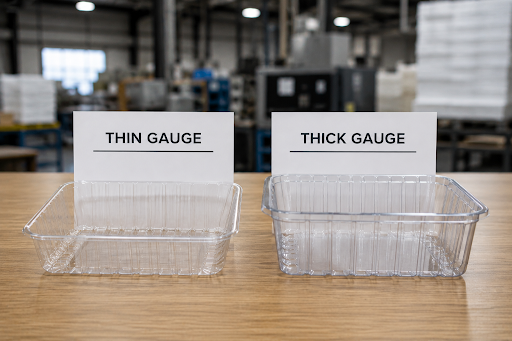
Pick up two clamshells off a store shelf and they can feel completely different, even from the same resin. That usually comes down to gauge the thickness of the plastic sheet before it's formed. Too thin, and the package flexes or fails in transit. Too thick, and you're paying for material and shipping weight the product never needed. Getting this right is what separates packaging that performs from packaging that just looks right on paper.
Why Material Thickness Matters in Thermoformed Packaging
During thermoforming, a flat sheet is heated and stretched over a mold, which means it thins out unevenly as it forms into corners and deep cavities. A sheet that starts at a given gauge won't end up that thick everywhere on the finished part, especially in areas with sharp detail. That's why thickness has to be considered alongside part geometry from the start, not decided in isolation. We go into more detail on this in our post on what geometry has to do with custom plastic thermoforming.
How Thickness Affects Strength and Durability
Thicker material generally holds up better under stress, but "thicker" isn't automatically "better." What matters is where that thickness ends up after forming.
- Impact resistance – thicker walls absorb more shock during shipping, which matters most for heavier products or rough handling
- Rigidity – added thickness reduces flex, keeping blisters and clamshells from bowing or popping open
- Seal integrity – consistent thickness at the sealing flange helps maintain a strong, tamper-resistant seal
- Resistance to cracking – adequate thickness at hinges and corners helps the package hold up through repeated handling
Material selection and thickness go hand in hand here. A resin like CPET holds up differently under stress than polypropylene, so the right starting gauge depends on which material is doing the work.
Finding the Right Balance Between Protection and Cost
Every extra fraction of a mil adds cost, in resin, shipping weight, and often cycle time. Thickness is one of the most direct ways to manage packaging cost without cutting corners on protection. The goal isn't minimal material, it's exactly as much as the product needs.
This is where an experienced tooling and design team pays off. Our packaging design team can model how a gauge will perform once formed, instead of guessing and hoping it holds up. We've written more on this tradeoff in our post on reducing costs with thermoformed lightweight packaging.
How Material Thickness Influences Product Performance
Thickness shapes how a package functions day to day. A blister that's too thin can distort in transit, making the product harder to display on a hook. A tray that's too thick adds unnecessary freight cost across thousands of units. Thickness also affects clarity, thinner, well-formed sections of PETG or CPET tend to stay clearer and show off the product better, which matters where shelf appeal drives purchase decisions. We cover related material tradeoffs in our guide on PET vs. PVC.
Industry Applications That Require Different Material Thicknesses
There's no universal "right" thickness, different industries put packaging through very different demands:
- Medical packaging often needs tighter tolerances to maintain a reliable sterile barrier
- Electronics packaging frequently uses thicker-walled trays to protect components from static and impact
- Retail packaging tends to prioritize clarity and shelf appeal in visible areas while reinforcing structural points
- Automotive packaging often requires heavier gauges for repeated handling and part weight
- Cosmetics packaging balances a thinner, glossier finish with enough thickness to protect the product
- Food packaging has to balance durability with compliance, since thickness affects seal performance and shelf life
Thickness specs should always be built around the actual product and handling environment, not a generic standard.
Choosing the Right Material Thickness for Your Packaging
Landing on the right gauge starts with a few questions: What does the product weigh, and how fragile is it? What does shipping and handling look like end to end? Does the package need to prioritize clarity, rigidity, or both? Our materials page breaks down the resins we work with most, a good starting point before locking in a thickness.
Partner with Munot Plastics for Packaging That's Built to Perform
For over six decades, Munot Plastics has helped manufacturers across medical, electronics, retail, automotive, and cosmetics industries dial in the material thickness their packaging actually needs. Our team works directly with your engineers from material selection and tooling design through full-scale packaging production, so every gauge decision is backed by real forming data.
Ready to talk through the right thickness for your next packaging project? Contact Munot Plastics today to get a custom project estimate.