"Thermoforming or vacuum forming?" is a question we hear a lot, but it's not quite an apples-to-apples comparison. Vacuum forming is actually one method within the broader thermoforming process, not a separate category altogether. Understanding how the two relate, and where their capabilities diverge, makes it a lot easier to figure out which approach is the right fit for your packaging.
Understanding How Each Manufacturing Process Works
Thermoforming is the umbrella term for any process that heats a plastic sheet until it's pliable, then forms it over or into a mold. How that forming actually happens is what separates the methods underneath that umbrella, vacuum forming, pressure forming, and twin-sheet forming among them. We cover the full process in more detail in our post on what thermoforming is.
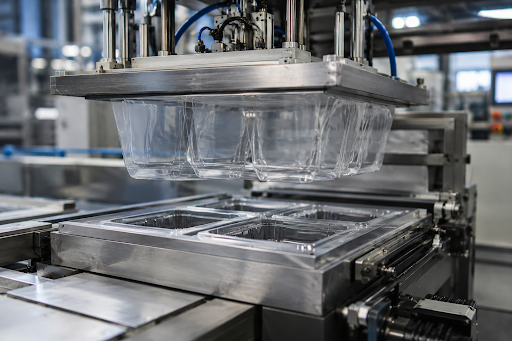
Vacuum forming is the simplest and most established method. Once the heated sheet is positioned over the mold, a vacuum pulls air out from underneath it, drawing the sheet tightly against the mold surface using nothing but negative pressure. It's a reliable, cost-effective way to form a wide range of shapes, and it's often the starting point when people talk about thermoforming in general.
Key Differences in Capabilities and Applications
Since vacuum forming is a subset of thermoforming, the real comparison is between vacuum forming and other thermoforming methods, most often pressure forming.
- Detail and texture – pressure forming adds compressed air on top of vacuum, pushing the sheet into fine details, sharp corners, and textured surfaces that vacuum forming alone can't always capture
- Wall thickness consistency – added pressure distributes material more evenly across a part, while vacuum-formed parts can thin out more in deep-draw areas
- Cost and complexity – vacuum forming typically requires simpler tooling and lower upfront investment
- Cycle times – vacuum forming often runs faster for straightforward shapes, since it skips the added equipment involved in pressure-assisted forming
Neither method is universally "better." The right choice comes down to what the part needs to do and how much detail it requires.
Common Products Made with Each Manufacturing Method
- Vacuum-formed products – simpler blister packs and clamshells without intricate detail, point-of-purchase displays, and basic product trays
- Pressure-formed products – custom thermoformed trays for electronics and medical devices, textured surfaces for retail presentation, and packaging where wall thickness has to stay consistent across a complex shape
- Twin-sheet products – double-walled parts and containers that need added rigidity or a finished look on both sides
When Vacuum Forming Is the Right Choice
Vacuum forming makes the most sense when a project prioritizes speed and cost over fine detail. It works well for simpler geometries, shorter production runs where tooling investment needs to stay low, and packaging where the main job is protecting and displaying a product rather than replicating intricate surface detail. If the part doesn't demand tight tolerances or sharp texture, vacuum forming is often the more economical route to a reliable result.
When Thermoforming Offers Greater Flexibility
Once a project calls for finer detail, tighter wall thickness control, or more complex geometry, other thermoforming methods like pressure forming start to make more sense. They're better suited to parts with deep draws, sharp corners, or textured surfaces, and to industries like medical and electronics where consistency and precision carry more weight than upfront tooling cost. Our thermoform tooling design team can help determine which forming method actually fits a given part before tooling gets built.
How to Choose the Best Process for Your Project
Landing on the right process comes down to a few practical factors:
- Level of detail – fine features, sharp corners, or textured surfaces usually point toward pressure forming over standard vacuum forming
- Production volume – lower volumes and tighter budgets favor vacuum forming's simpler, less expensive tooling
- Wall thickness requirements – parts that need consistent thickness across a complex shape benefit from the added control pressure forming provides
- Industry tolerances – retail packaging generally has more flexibility, while medical and electronics packaging often demand the precision that pressure forming delivers
Partner with Munot Plastics to Find the Right Forming Process
For over six decades, Munot Plastics has helped manufacturers determine whether vacuum forming, pressure forming, or another thermoforming method is the right fit for their packaging. Our team works directly with your engineers from tooling design through full-scale packaging production, so the process gets matched to the part, not the other way around.
Not sure which forming method fits your project? Contact Munot Plastics today to talk through your requirements and get a custom project estimate.