
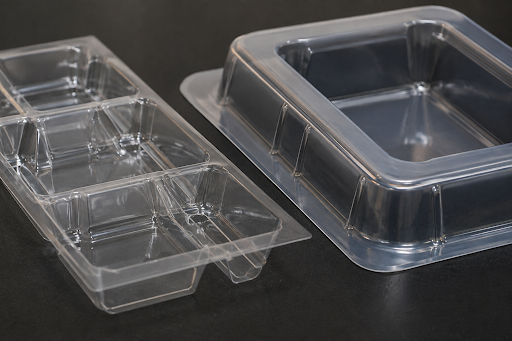
Thin gauge and heavy gauge thermoforming both start with the same basic process, heating a plastic sheet and forming it over a mold, but they're used for very different applications. Thin gauge thermoforming works with material under about 0.060 inches thick and is typically used for packaging like trays, clamshells, and blisters. Heavy gauge thermoforming uses thicker material, generally above that threshold, and is used for more durable, structural parts like enclosures, panels, and industrial components. The right process depends on how much strength, rigidity, and durability your product needs.
Not All Thermoforming Is Created Equal
Thermoforming covers a wide range of applications, from disposable packaging to heavy-duty equipment housings, and gauge thickness is one of the biggest factors that separates them. A packaging engineer designing a blister pack and one designing an equipment enclosure are working with the same manufacturing process, but very different material requirements, tooling, and production methods.
Understanding the Difference Between Thin and Heavy Gauge Thermoforming
Thin gauge thermoforming uses roll-fed plastic sheet, typically under 0.060 inches thick, and is well suited to high-volume production runs. This is the process behind most packaging applications, including:
- Retail clamshells and blister packs
- Food and medical trays
- Point-of-purchase displays
- Disposable or single-use packaging
Heavy gauge thermoforming, on the other hand, uses individual sheets of thicker plastic, often ranging from 0.060 inches up to a quarter inch or more. It's used for parts that need to hold up to repeated use, structural loads, or harsh environments, such as:
- Equipment housings and enclosures
- Automotive and industrial panels
- Durable trays and reusable containers
- Structural components requiring rigidity
You can learn more about the fundamentals of the process in our overview of what thermoforming is and how it works.
How Material Thickness Impacts Performance and Durability
Material thickness directly affects how a finished part performs. Thin gauge parts are lighter and less expensive, but they're designed for single-use or short-term applications rather than repeated stress. Heavy gauge parts hold up to more abuse, resist impact and flexing better, and are generally built to last through years of use rather than one trip through a supply chain.
That difference also shows up in how each part behaves under load. Thin gauge material can crack or deform under sustained pressure, while heavy gauge material is engineered to keep its shape even when it's stacked, dropped, or exposed to temperature swings. Choosing the wrong gauge for the application can lead to premature failure, whether that means a package splitting in transit or a housing cracking under normal use.
From Retail Packaging to Industrial Components: Where Each Process Excels
Thin gauge thermoforming tends to make the most sense for packaging across retail, food, medical, and electronics applications, where products like clamshells, blisters, and thermoformed trays need to protect a product without adding unnecessary weight or cost.
Heavy gauge thermoforming shows up more often in industrial, automotive, and equipment applications, where parts need to withstand years of handling, outdoor exposure, or mechanical stress. This includes things like machine guards, vehicle components, and reusable industrial containers that need to survive far more wear than a single-use package.
Cost, Tooling, and Production Considerations
Gauge thickness affects more than just the final part. It changes how the entire production process is set up:
- Material cost: Heavy gauge sheet costs more per part due to the added material
- Tooling: Thin and heavy gauge processes require different equipment and tooling approaches, which our thermoform tooling manufacturing team accounts for from the start
- Cycle time: Heavy gauge parts generally take longer to form and cool due to the thickness of the material
- Production volume: Thin gauge processes are typically better suited to high-volume runs, while heavy gauge production often runs in smaller, more specialized batches
Choosing the Right Thermoforming Process for Your Next Project
The right process comes down to how your product needs to perform once it's in use. If you're packaging a product for retail, food, or medical applications, thin gauge thermoforming is almost always the more practical and cost-effective choice. If you're building a part that needs to withstand years of handling, structural load, or outdoor exposure, a heavy gauge is worth the added cost and lead time.
Our team can help you determine which process fits your application, and our packaging production capabilities support both thin and heavy gauge runs from prototype through full volume. Contact Munot Plastics to talk through your project and find the right fit.