A bakery switched to a cheaper clamshell for its muffins. The spec sheet on the best deal said "food grade," so it seemed like an easy call. Two weeks in, a store manager called the owner:
“The lids are popping open in the display case! I can’t tell which ones are safe anymore, or whether a customer opened one and put it back.”
The container may have been food grade, but the food wasn’t safe the second it stopped doing its job.
A plastic container is food safe when three things line up: the material is cleared for the food and temperature it will see, the container is made in a facility with audited food safety controls, and the design protects the food from filling to checkout. Get one wrong and the food is at risk, no matter how good the other two are.
Food-safe materials
The resin has to be cleared for food contact for that specific food and temperature. The FDA clears the substances that go into packaging, not the finished container, so the right term for a finished clamshell or tray is "FDA compliant." We explain the difference in FDA Compliant vs. FDA Approved Plastics for Food Contact.
Each material has a job it does best. These are the most common materials for food grade clamshell containers and thermoformed food trays, all of which Munot runs for food packaging:
|
Material |
Common food uses |
Temperature use |
Notes |
|
APET |
Clear clamshells for bakery, produce, and deli |
Cold to room temperature |
High clarity for retail display |
|
RPET |
Same as APET |
Cold to room temperature |
Recycled content; requires an FDA-cleared recycling process |
|
Bakery clamshells and domes |
Cold to room temperature |
Clear and lightweight |
|
|
Prepared foods, soups, to-go containers |
Microwave and hot fill |
Handles heat that PET can't |
|
|
Ready meals and bakery trays |
Freezer to oven, up to about 400°F |
Dual-ovenable |
|
|
Clamshells and trays with recycled content |
Depends on base resin |
Requires an FDA-cleared recycling process |
Recycled content is food safe only when it comes from a recycling process the FDA has cleared with a letter of no objection. (See recycled vs. virgin plastics.)
Munot's food packaging uses FDA-grade material certified free from BPA and phthalates.
Food-safe manufacturing
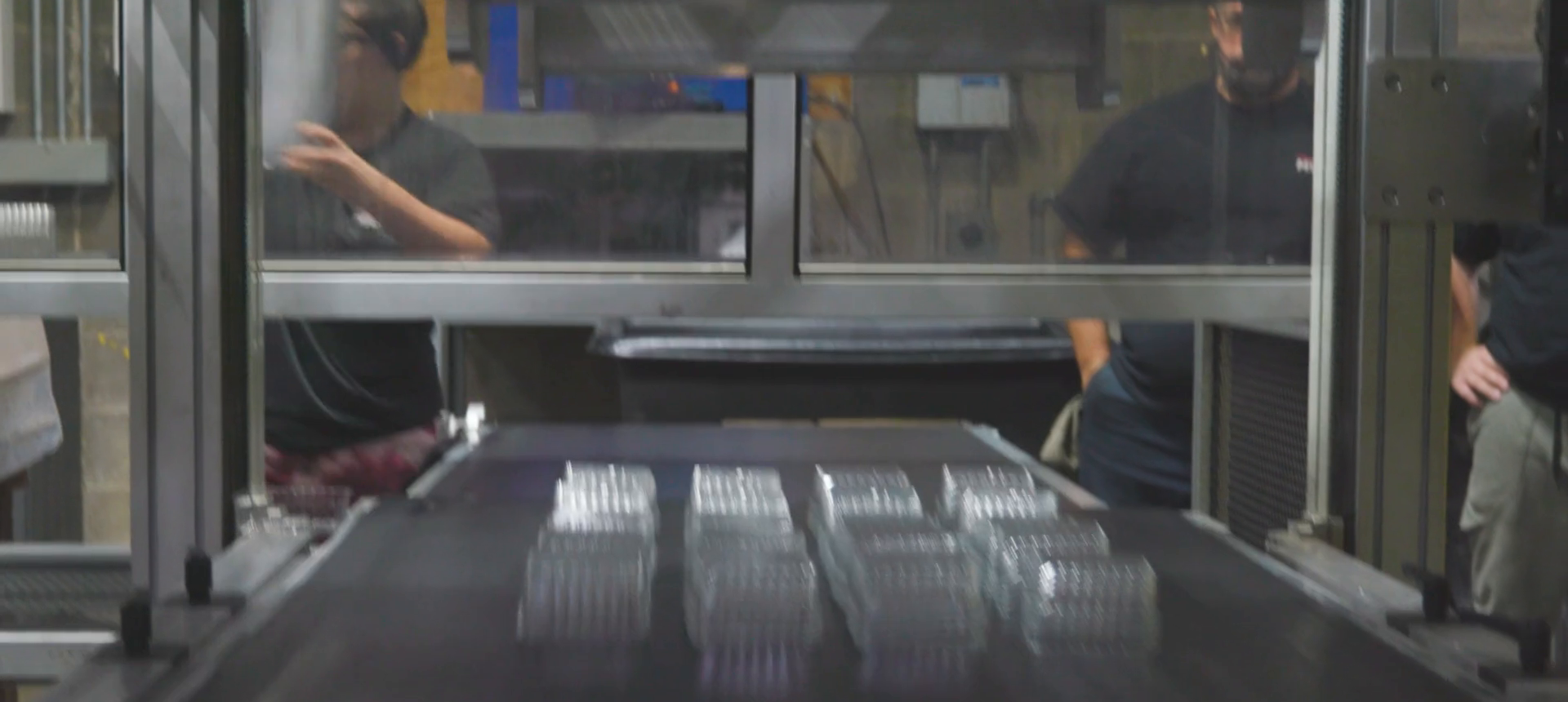
A compliant resin can still pick up contamination on the production floor. That's why where a container is made matters as much as what it's made of.
Munot is SQF certified for food packaging, based on HACCP food safety standards, and ISO 9001:2015 certified. SQF (Safe Quality Food) is a food safety certification benchmarked by the Global Food Safety Initiative (GFSI). On the production floor, it means:
- A documented food safety plan that identifies hazards and how each one is controlled
- Sanitation and pest control programs
- Controls that keep foreign material, such as metal, glass, or debris, out of the product
- Lot traceability, so every container can be traced back to its production run and resin
- Recall procedures that are tested, not just written down
A third-party auditor recertifies the facility every year, and at least one audit every three years is unannounced. That keeps the standard in place between orders, not just on audit day.
Very few custom thermoformers are SQF certified. We'll cover the certification process in an upcoming post on SQF.
Food-safe design
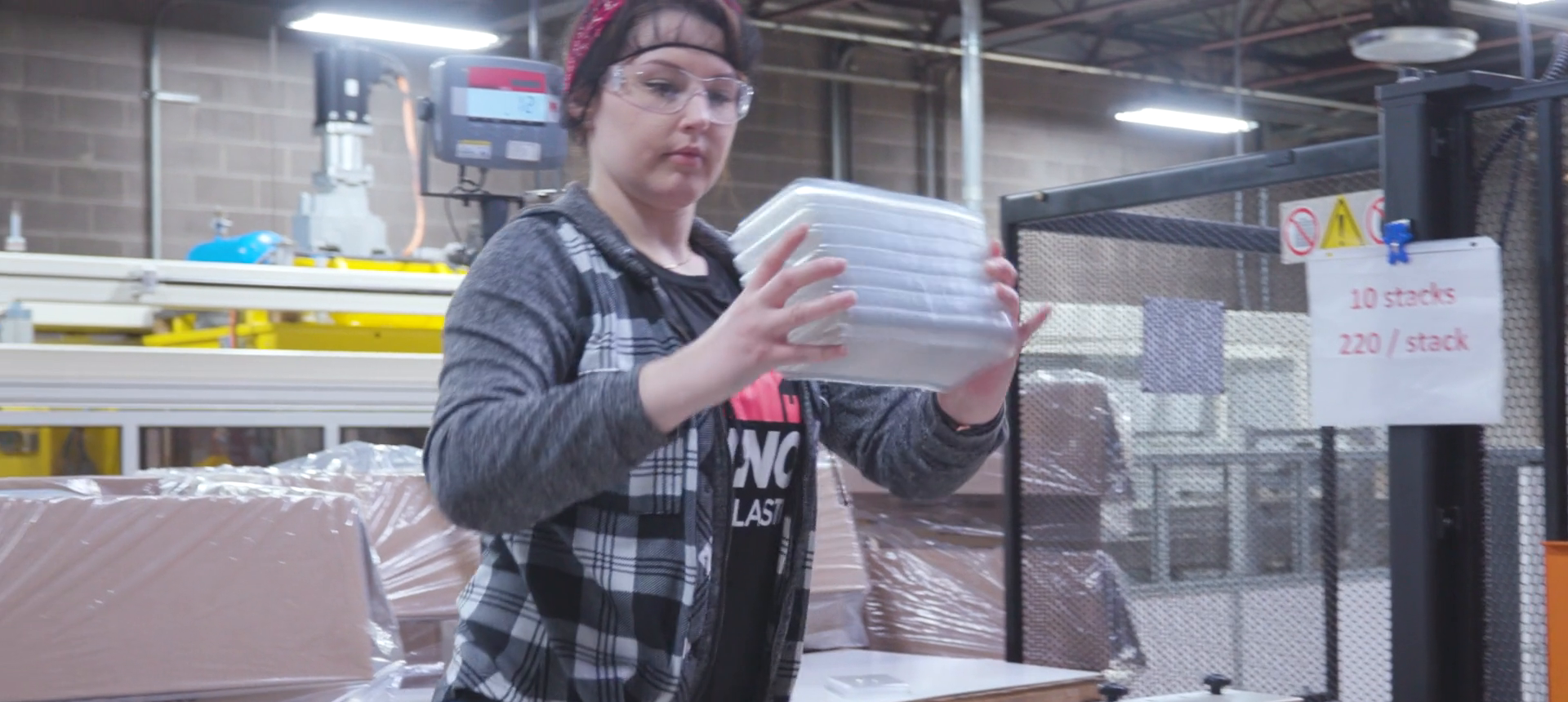
A container can be made from the right material in the right plant and still fail if the design doesn't protect the food. Design is where custom food clamshell packaging earns its keep.
- Tamper-evident features. These show a customer that a container hasn't been opened. Common options include tear strips and break-away tabs that have to be broken to open the container.
- Secure closures. Lids and hinges that stay shut through filling, shipping, stacking, and handling in the store, and keep contaminants out.
- Fit and protection. A container shaped to the product keeps it from shifting, crushing, or bruising. Berries, baked goods, and cut fruit all need different support. (More in how thermoformed packaging protects products during shipping.)
- Function for the food. Vents for produce or hot food, leak-resistant closures for wet or saucy items, and stacking strength for tall displays.
- Fit for the line. A container designed around the fill line, the food, and the retail shelf fills faster and holds up better.
Munot's packaging design team designs, prototypes, and tools food containers in house, so these features are built in from the first sample.
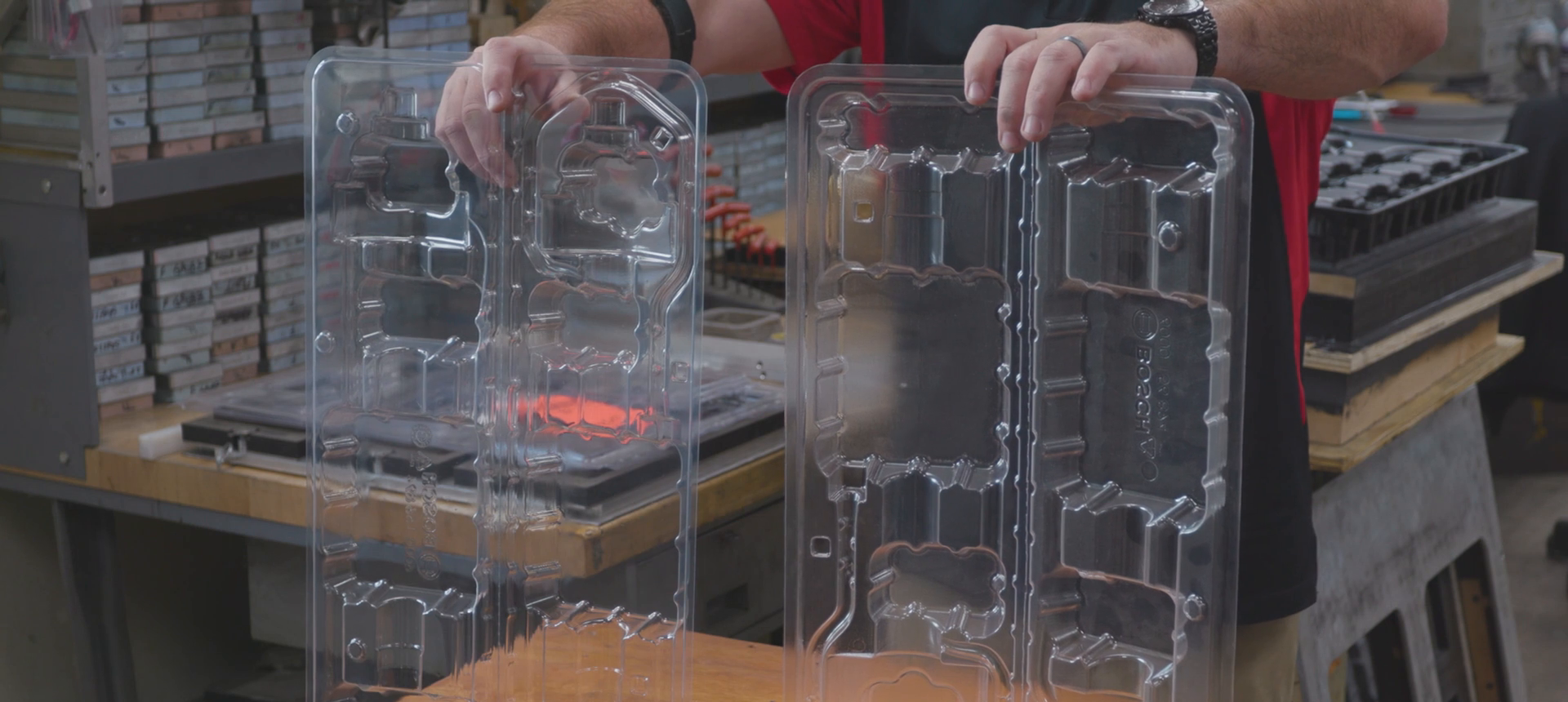
Clamshell or tray?
Both can be food safe. The right choice depends on the food and how it's sold.
Clamshells are one piece, hinged, and reclosable. They're common for bakery, produce, and to-go food service, where the customer opens and closes the container more than once. Munot's plastic clamshells can be made clear for display and sealed for freshness.
Thermoformed food trays are paired with a separate lid or sealed film. They're common for meat, ready meals, and multi-compartment packs, and for foods that go into the oven or microwave.
What to ask a food service clamshell manufacturer
Before you approve a supplier, ask for:
- A letter of compliance for each resin, and the food types and temperatures it covers
- A letter of no objection for any recycled content
- Current facility certification, such as SQF
- The tamper-evident options they can build
- Their design and prototyping process, including how many sample rounds are included
- How lots are coded and traced, and how a recall would work
A good supplier will have answers to all six.
FAQ
Are all plastic clamshells food safe?
No. A clamshell is food safe only if its material is cleared for the food and temperature it will see, it's made in a facility with food safety controls, and its design protects the food. A clamshell made for hardware or electronics isn't automatically safe for food.
Can food-safe plastic containers go in the microwave or oven?
Some can. PP is common for microwave use, and CPET can go from the freezer into a conventional oven. APET, RPET, and OPS are meant for cold and room-temperature foods and shouldn't be heated.
Is recycled plastic safe for food containers?
It can be, if the recycling process has received a letter of no objection from the FDA. Ask your supplier for that letter.
What is tamper-evident packaging?
Tamper-evident means packaging with a feature, such as a tear strip or break-away tab, that shows clearly if the container has been opened. It doesn't stop someone from opening it, but it makes tampering visible.
Talk to Munot about food packaging
The safest container is the one built for your food. Munot is a food service clamshell manufacturer with an SQF certified facility in Erie, Pennsylvania. Talk to Munot [CONFIRM: contact/quote URL] about custom food clamshells and trays made in an SQF certified facility.